Every grown-up starts little.
A developmental-science education for parents of children 0 to 5. Learn what your child is building, why ordinary moments matter, and how to respond with the confidence that comes from knowing the research.
Something hard right now? Start here.

At about 12 to 18 monthsLooking at the same thing together is how words get attached to things.
The child pointsA way of saying “Look at that!” Any bid for attention counts.
The parent looks tooThat answers the bid. Nobody catches every one; coming back again and again is what counts.
Why is leaving the playground so hard?
One ordinary visit in four frames, and what may be developing beneath each. Nothing about the playground changes. The plan does.

Ten minutes on the slide, and everything is fine. You give the two-minute warning.
Beneath the surface
You are inside the system too. Being late, being watched by other parents, being tired: your own state shapes how you respond. Supported. Waters and colleagues, 2014.
What helps
Say what is next before the end. “Two more slides, then lunch.” A plan said out loud gives your child something to hold on to, even if it does not stop the protest.

“Time to go.” Nothing about the playground has changed. The plan has.
Beneath the surface
Switching rules is hard at this age. Most three-year-olds keep sorting by the first rule after being told the new one. Leaving asks for a similar switch, from “play” to “go”, in a moment that matters far more to a child. Well established in laboratory tasks. Zelazo, 2006.
What helps
One small choice inside a firm limit. “Slide or swing for the last one?” Your child gets a say in how you leave, not whether.

Your two-and-a-half-year-old turns and runs back to the slide.
Beneath the surface
The brakes are the last part to arrive. Holding back or stopping an action relies partly on brain systems that grow fastest in the preschool years and keep developing long after. Well established. Diamond, 2013.
Autonomy is the work of this age. “No” is part of becoming a person with a will of one’s own, and it often shows up right when an adult’s plan takes over. Supported. Brownell and colleagues, 2007; Erikson, 1950.
What helps
The hand held low. Close, steady, not grabbing. Narrate the next step as you go: the working memory that holds “home, lunch, nap” is yours for now.

You reach for a hand, and they drop to the ground. Loud, fast crying.
Beneath the surface
Once overwhelmed, reasoning does not land. Words and reasons tend not to land until a child has calmed down. Young children borrow a calm adult to get there. Supported. Diamond, 2013.
Taught in Module 4 of the toddler class.
What helps
Regulate first, teach later. Fewer words, a lower voice, a steady body, staying close. The explanation can wait for the car.
Expect it to be hard sometimes anyway. A smooth exit on Tuesday and a floor exit on Wednesday is ordinary at this age, not proof the method failed.
Open the full Lens, with sourcesRead: The toddler “no” is not the war you think it is · Try: It’s hard right now · Learn: Toddler years, modules 3 and 4
A conceptual reading of a typical moment, not a diagnosis. Each line was checked against the primary sources in October 2026. Sources
Why this exists.
From Little Onward exists to make high-quality, science-backed parent education accessible to any parent who seeks it, not only those who can enroll in a graduate program or pay for a specialist.
The first five years, understood.
One class for each window of the first five years. Each one covers your child, yourself and your influence, because a child’s calm is borrowed before it is owned. You learn the mechanism, the evidence, and the limits of what anyone can know about one child, at your own pace. Ages are typical ranges, not deadlines.
Free tools, by what you need

Clear about what’s known. Honest about what’s not. Every claim in the library is graded for evidence strength and consensus, and every page cites its sources.
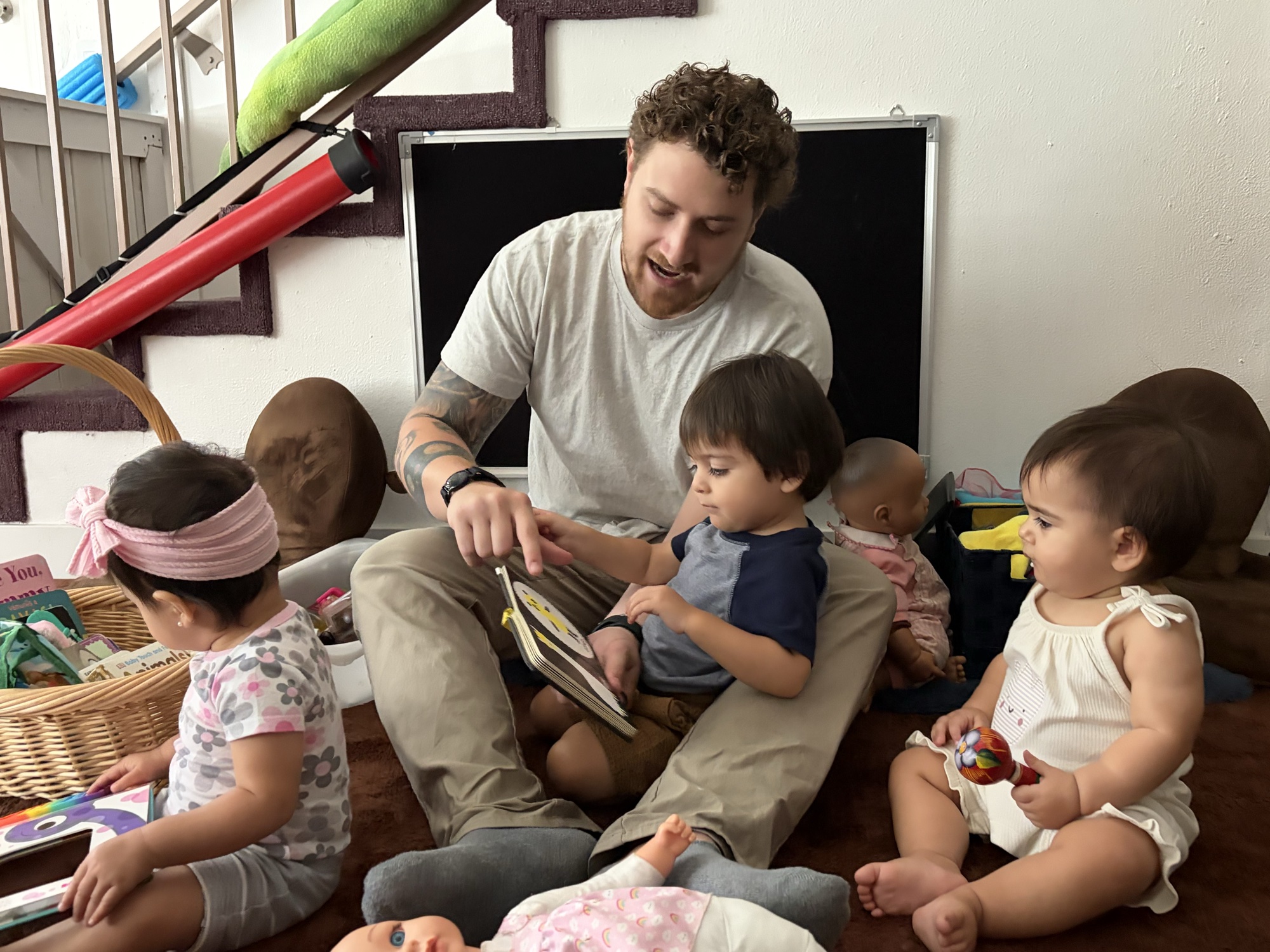
The person behind the classes.
Matthew McArthur holds an M.A. in Developmental Psychology from San Diego State University, where he studied how the home shapes early development, after working with developmental researchers at UCLA. With Dr. Margaret Friend, he wrote “Why Early Chatter Matters” for Frontiers for Young Minds, a journal reviewed by young readers. He then spent two years in state-funded early intervention, coaching more than 100 families of children under three.
Sources cited on every pageEducational, not clinical

Love your child. Learn the science.
One self-paced class for each window from birth to five, built from peer-reviewed research and taught for an ordinary Tuesday. Open to any parent who seeks it.
See the classes$49 a class, or all three for $119. Lifetime access, no subscription. Full refund within 14 days if you have watched four lessons or fewer.